AUTHOR
Oleksandra Nekrashchuk, NV
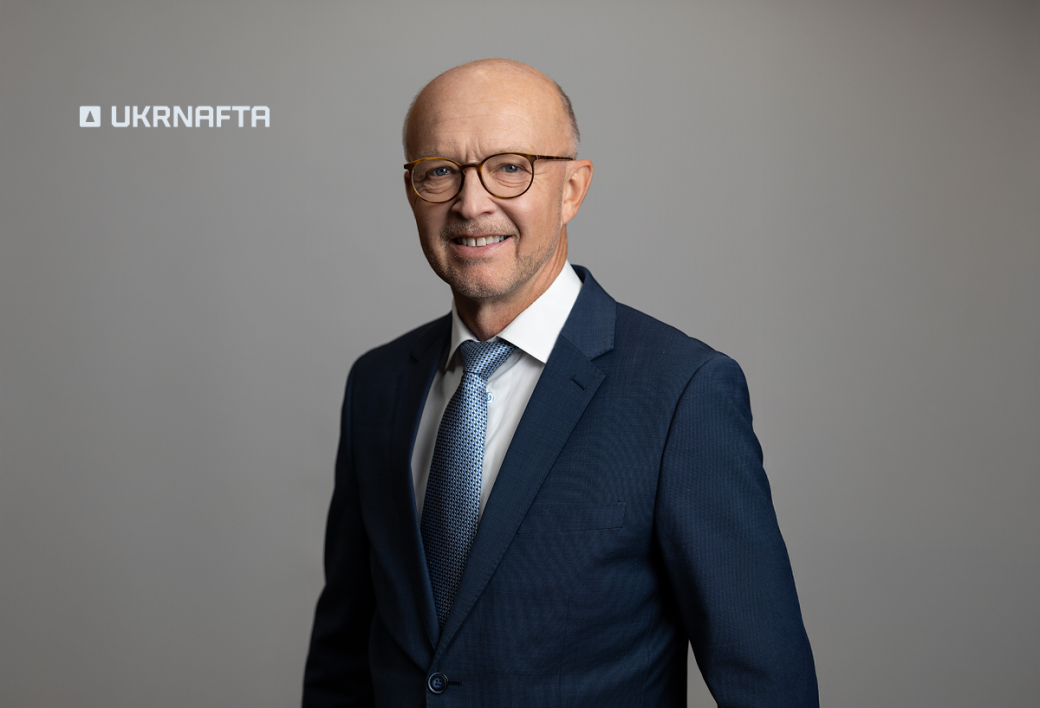
Timothy Dodson
Biography
Graduated in 1980 from the University of Keele (United Kingdom) with a degree in Geology and Geography.
Began his career as a field geologist in South America and the Middle East.
In 1985, he joined Statoil (now Equinor, Norway), where he worked for 35 years, progressing from technical roles to senior strategic leadership positions.
He led exploration activities in Norway and internationally, held the position of Senior Vice President for Global Exploration, and from 2011 to 2020 served as Executive Vice President for Exploration.
In 2024, he joined the Supervisory Board of PJSC Ukrnafta, and in March 2026 was appointed Chairman of the Supervisory Board.
— Let’s start with developments in the Middle East. How are they affecting Ukraine and Ukrnafta’s operations?
— The entire market is closely monitoring developments in the Middle East. Within just a few days, we have already seen an impact on oil and gas prices, logistics, and supply chains. Almost all countries are currently facing similar challenges. For example, the United Kingdom is experiencing gas supply issues due to reduced LNG deliveries from Qatar.
Ukrnafta’s primary focus is to ensure the stability of the fuel market and a reliable fuel supply for the economy, particularly for the defence sector. The active phase of the agricultural season is beginning, which increases demand for diesel fuel and puts additional pressure on the market.
That said, I can assure you that the Supervisory Board, together with the Management Board, is working on this issue around the clock.
In recent months, we have been consistently strengthening our fuel supply system by diversifying import routes and expanding the geography of suppliers. The company continues to contract additional volumes of petroleum products. Another tender was announced last week. I cannot disclose the results, but in the current environment, we are acting very proactively.
Like other companies, Ukrnafta could take advantage of the situation and significantly increase prices, as costs are also rising. However, we must think in terms of the broader interest — the country, the people, and the economy. That is why Ukrnafta currently offers the most competitive prices on the Ukrainian market.
— Am I correct in understanding that the Supervisory Board of Ukrnafta has been involved in the diversification of supply chains?
— Yes, to a certain extent. This is done in close coordination with the company’s Management Board. One of the key strategic decisions taken over the past year was precisely to diversify supply. In a sense, we were fortunate to have taken these steps in advance, as this now allows the company to respond more effectively to the current situation.
— What would you highlight as the key achievements and projects in your career?
— Speaking of my key achievements, one of them was shaping a strategic approach to exploration as an investment business — with clear project selection criteria, transparent decision-making processes, and strong accountability for results.
As for the most significant projects, perhaps the most notable was the discovery of the Johan Sverdrup field in Norway. According to current estimates, the field is expected to produce around 3.5 billion barrels of light oil.
Everything starts with geologists. I always say: there is no barrel of oil that has ever been produced without first being discovered. The same applies to gas — there is no molecule of gas that has been produced without first being found.
— As a geologist, do you support Ukrnafta’s efforts to expand its resource base and reserves, which the company has been actively pursuing in recent years? Was this your initiative?
— I wouldn’t say I can take credit for that idea. But I certainly support it.
When I joined the Supervisory Board, the company had already recognised the need to significantly increase drilling, both exploration and production wells. Reserves were declining, and the only way to reverse this trend is to discover new fields, develop them, and drill more.
Last year, 25 wells were drilled. All of them were successful, which is, frankly, quite a rare outcome.
Another surprise for me was that before joining Ukrnafta, I knew very little about the potential of Ukraine’s oil and gas resources. I was genuinely impressed by the scale of these resources and the significant opportunities for further development using modern technologies.
— Were you aware of the corporate governance challenges and scandals associated with Ukrainian state-owned companies? And if so, why did you decide to take on this challenge and join Ukrnafta’s Supervisory Board?
— I was aware of these challenges. However, I learned a great deal from one of the CEOs of Equinor. One of his principles was that the only way to change a situation is to become part of it.
When I was approached about potentially joining Ukrnafta’s Supervisory Board, it did not take me long to make a decision. Essentially, I was guided by two considerations. First, I wanted to support Ukraine in the circumstances it is facing. Second, I felt that I had the relevant experience and expertise that could be particularly valuable in the area of corporate governance.
I firmly believe that corporate governance is not a formality. It is the foundation of stability, trust and strategic discipline.
— Why is effective corporate governance critically important for Ukrnafta?
— It is the foundation of stability, predictability and access to international financing. Access to capital, as well as the trust of investors and partners, is directly linked to the quality of governance processes.
International partners, including institutions such as the EBRD, assess not only a company’s financial performance. They also evaluate the nature and maturity of its corporate governance system, the independence of the board and, importantly, the transparency of decision-making.
There are several fundamental principles that must be upheld:
● independence of the Supervisory Board
● clear separation of powers between the board and management
● transparency and accountability
● collective responsibility for strategic decisions
— In this context, what is your view on direct interaction between company management and the government or politicians? Is it normal, for example, when the President publicly states that Ukrnafta should fix fuel prices at its filling stations?
— I would frame it slightly differently. Is it normal for executives of oil and gas companies in other countries to interact with politicians and governments? Yes, it is entirely normal. Such interaction may involve providing advice and recommendations. Whether those are followed is a different matter.
However, this does not mean that governments will never intervene if they consider it necessary, particularly in times of crisis. I would go even further and say that Ukraine is in an exceptionally challenging situation. You have been living through a crisis for four years, and the nature of that crisis continues to evolve. This requires immediate action at all levels — from the President and the government to Ukrnafta.
— Did you consult with foreign professionals who had worked in Ukraine before joining Ukrnafta?
— One of my former colleagues, Tor Martin, joined the Supervisory Board of Naftogaz of Ukraine a few months before I did. Before accepting the role, I spoke with him and asked him to share his experience.
— Were there any attempts by Ukrainian politicians to establish informal contact with you during the selection process for the Supervisory Board — either two years ago or more recently?
— No, absolutely none. The selection and appointment process was conducted through a recruitment company chosen via a competitive tender.
— How would you assess the company’s condition at the time you joined the Supervisory Board?
— I was positively surprised, as I saw a very strong management team. The organisation also appeared highly professional from a technical standpoint.
At the same time, it was clear that these capabilities had not been sufficiently developed for some time. Therefore, it was very encouraging to see that after Ukrnafta came under state management, the company began actively working to realise this potential — and has the necessary competencies to do so.
The biggest difference compared to what I was used to in international companies was what I would describe as institutional capacity. This includes structured processes, investment discipline, long-term strategic planning, and many elements of corporate governance. Functions such as risk management, compliance and audit required further development.
In other words, the company’s core operational activities were generally at a good level. However, the governance framework surrounding them still required further strengthening.
— Have there already been changes implemented in the company’s governance system or strategy? Should the company align with the standards of leading European or global companies?
— I believe it should, and I will explain why. But first, on the first part of your question. Over the past period, we have taken a number of steps and significantly strengthened the corporate governance system.
At the same time, this is an ongoing process. Even if European or global companies have well-developed governance systems, it does not mean they stop improving them. The world is constantly evolving, and so are the expectations of society and public institutions towards energy companies.
For example, 20 years ago, almost no one was talking about ESG. Even 15 years ago, it was not as relevant. Today, it is impossible to ignore.
As for Ukrnafta, the company’s charter has been updated. We now have a more comprehensive corporate governance system: risk management and compliance functions have been strengthened, and responsibilities between the Supervisory Board and management have been more clearly delineated.
In addition, a Management Board has been established as a collegial executive body.
— You mentioned ESG. Do you consider an ESG strategy to be realistic and necessary for oil and gas companies?
— The short answer is yes, without any doubt. For an oil and gas company, ESG primarily means sustainable development combined with environmental and social responsibility, as well as strong corporate governance.
And most importantly, without a comprehensive ESG strategy, it becomes very difficult to attract financing or work with international partners.
— How do Russian strikes on Ukrnafta’s production assets affect the work of the Supervisory Board and its decision-making?
— If we look at it objectively, what does war mean for a company? Wartime conditions significantly increase operational, financial and security risks.
For the Supervisory Board, this means we must place much greater focus on business resilience, risk management, liquidity and financial flows.
And, of course, ensuring the maximum safety of our employees is critically important.
Given how volatile and dynamic the situation is, the Supervisory Board is required to regularly review the company’s strategic development plans, financial plans, investment programmes and investment priorities. We review them on a monthly basis, as many factors remain beyond our control.
In such conditions, structured risk assessment, scenario planning and the ability to make decisions under uncertainty become critically important. These are universal management capabilities.
— You have already touched on your international experience. How can it be applied in Ukraine?
— My experience is primarily related to capital allocation discipline and investment prioritisation — defining not only what a company should do, but also what it should not do.
This is very important because no company in the world has unlimited investment resources. The easiest thing is to say “yes”. The hardest thing is to say “no”.
— Can you give an example of when the Supervisory Board recommended not doing something?
— I can give one example related to the drilling programme. During one of the discussions, we asked a simple question: if we shut down the 20% least productive wells, how much would total production decline? If I recall correctly, the reduction would have been around 2%.
Each well requires costs — electricity, equipment, maintenance and personnel. In some cases, operating certain wells may cost more than the value of the oil they produce.
The company took this recommendation into account and shut in some of these wells or placed them in idle mode. As a result, production losses were minimal, while costs were significantly reduced, particularly in electricity consumption, the price of which has increased substantially in recent times.
The next step could be a similar analysis at the field level — to identify which assets deliver the highest efficiency. Capital currently spent on maintaining very low-productivity assets could instead be redirected towards seismic exploration or drilling new wells that may be significantly more productive.
— One of the most debated issues in Ukraine is the level of remuneration for management and Supervisory Board members. What should it be compared to international benchmarks?
— I think comparisons should be made with caution, as circumstances differ significantly. We have already discussed the additional levels of risk and responsibility. One can also consider the level of engagement of the Supervisory Board.
I would put it this way: the level of remuneration, both for the Supervisory Board and the Management Board, should correspond to the level of responsibility, competencies, required experience and, of course, performance — whether results are delivered or not.
— By the way, how much time does your role on the Supervisory Board take?
— I am available by phone 24/7. So my work with Ukrnafta takes quite a significant amount of time. It is not a full day or 12-hour shifts, but there is something to deal with every day, in addition to regular board and committee meetings.
— One of the distinctive features of Ukrnafta today is that the shares previously owned by private shareholders were transferred to the state in 2022. Does this affect the decisions of the Supervisory Board and management?
— It does not affect the work of the Supervisory Board. Our sole responsibility is to act in the interests of the company as a separate legal entity and in the interests of its shareholders. The ownership structure does not change the board’s fiduciary duty.
We make strategic decisions from a long-term perspective.
— You chair the Nomination Committee that selected the company’s new CEO. How was the selection process organised?
— The selection process was structured and competitive. We had clearly defined criteria and assessment stages. The objective was to ensure transparency, a professional evaluation of candidates and collective decision-making.
First, a longlist of candidates was formed, followed by a shortlist, after which several rounds of interviews were conducted. A thorough due diligence process was carried out for the candidates.
The final decision was made collectively by the Supervisory Board, taking into account the long-term interests of the company and its shareholders.
— Was there any political pressure on you or your colleagues during this process?
— No.
— What areas do you believe should become priorities for UKRNAFTA in the future?
— The first priority should always be a more comprehensive development of Ukraine’s oil reserves. Many existing wells are very old and produce very little oil. A significant portion of the technologies used is also outdated.
I believe that with modern 3D seismic technologies, the company has very strong potential not just to maintain production levels, but to increase them — possibly significantly.
— The final questions relate back to the first topic. Following Russia’s full-scale invasion of Ukraine, Europe has largely abandoned Russian energy resources and shifted towards Middle Eastern supplies. One German magazine even featured a cover with the Emir of Qatar and the headline “The New Gas Dealer of Europe.”
Did Europe make a mistake by replacing one dominant supplier with another? Should diversification be the priority? And do you see a role for Ukraine in this process?
— I think the short answer is probably no. But the reason is not political. In my view, Ukraine’s key objective should be to make the most efficient use of its own resources and, as far as possible, ensure self-sufficiency in gas and oil so as not to depend on imports, as was the case this winter.
— And what about diversification of supply chains in Europe?
— The oil and gas business is a long-term business. Gas in Qatar has not disappeared — it is simply difficult to transport at the moment.
I believe Europe has already diversified its supply to a certain extent, but current developments will likely prompt many governments to reconsider whether further diversification is needed.