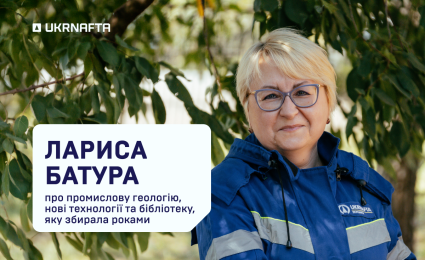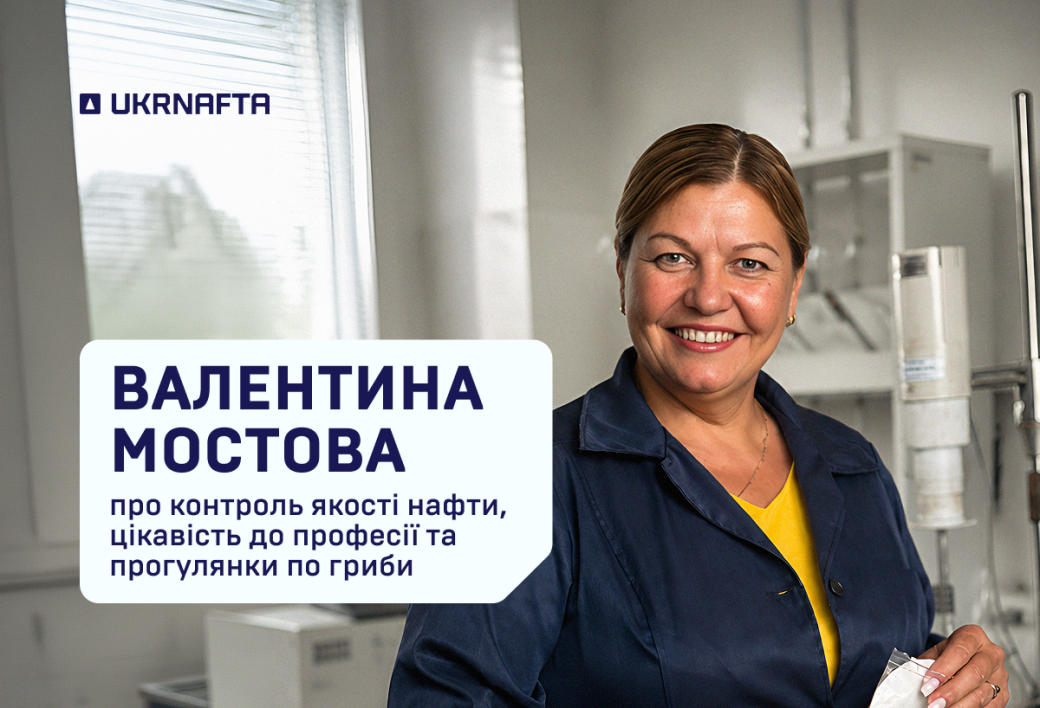
Twenty-four years ago, Valentyna Mostova first joined the UKRNAFTA laboratory. She started as a trainee, effectively learning a new profession from scratch. Today, she is an experienced specialist whose precise work plays an important role in controlling the quality of crude oil treatment.
Valentyna was born and raised in Sumy region. After completing the eighth year of school, she enrolled at a medical college, where she trained as a sanitary paramedic — an assistant to a public health doctor. In 1992, she began working for the sanitary and epidemiological service. She spent around ten years in the field, although part of that time was taken up by maternity leave.
She decided to change careers in 2002. She initially joined as a trainee, became a third-grade laboratory technician within a few months and later progressed to the fourth grade.
Valentyna does not remember the transition from medicine to the oil industry as being particularly difficult. She was surrounded by experienced colleagues who helped younger employees learn the profession. Most important, however, was her own determination to understand every process. “It wasn’t difficult for me — I wanted to learn. I was always asking: what is this, what is it for and how should it be done properly? If something didn’t work out, I simply did it again,” she says.
Today, during each shift, Valentyna and her colleagues take samples of sales oil every three hours. In the laboratory, they measure water and chloride salt content, density and other parameters. The test results are then passed on to the process personnel. The laboratory data allow specialists to assess how effectively the crude oil has been treated and whether the process needs to be adjusted.
Safety is a particular priority in the laboratory. Work involving chemicals is carried out in fume cupboards fitted with protective glass. Laboratory technicians wear specialist clothing, gloves and safety glasses and regularly demonstrate their knowledge of the rules for handling substances and equipment.
Outside work, Valentyna enjoys mushroom picking and tending the area around her home. After completing renovations to the house, she was finally able to devote more time to the garden and is now gradually filling her flower beds with roses.
For many years, she has been accompanied on her woodland walks by her dog Achilles, a hunting Vizsla who is well known even among her colleagues. When he was younger, he could cover several kilometres on his own and turn up at the laboratory. Achilles is now 12 years old. At weekends, the two of them walk down to a nearby ravine and around the edge of the forest, and during mushroom season they return home with a basket as well. Valentyna says these walks are her way of relaxing.