The Supervisory Board of JSC Ukrnafta visited the company’s production assets in western Ukraine and reviewed the results of the first quarter of 2026.
Despite the war, infrastructure damage and challenging operating conditions, the company continues to maintain operational stability, advance its production business and demonstrate growth in the retail segment.
“The Supervisory Board positively assesses the results achieved by the Ukrnafta team under exceptionally challenging circumstances,” said Timothy Dodson, Chairman of the Supervisory Board of JSC Ukrnafta. “The company continues to demonstrate the resilience of its operating model, a systematic approach to development and the ability to adapt to unprecedented challenges. Importantly, while maintaining stable operations, the team continues to invest in technology and build the foundation for long-term growth.”
The company’s annual results have also been confirmed by an independent auditor that is part of the international KPMG network. Based on its 2025 results, the company generated UAH 99.6 billion in revenue, paid UAH 28.8 billion in taxes and transferred UAH 5 billion in dividends to the state.
“It is extremely important that the company continues to develop, modernise, support the Defence Forces and contribute to the country’s economy while strengthening its leadership position in the industry. At the same time, the implementation of modern transparency and corporate governance standards creates opportunities for cooperation with global leaders and for attracting international capital,” said Kateryna Kuznetsova, Independent Member of the Supervisory Board of JSC Ukrnafta.
According to Bogdan Kukura, CEO of JSC Ukrnafta, the company continues to adapt its operations to wartime challenges.
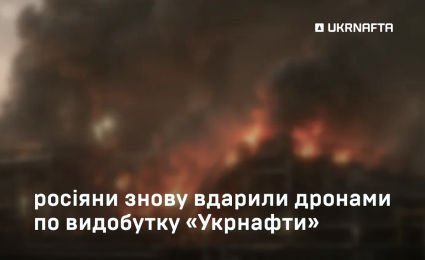
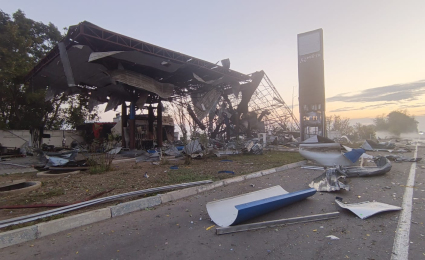
“Despite Russian attacks on infrastructure, significant equipment damage and power outages affecting the mechanised well stock, we managed to maintain hydrocarbon production volumes at the level of the same period in 2025,” said Bogdan Kukura. “Additional operational and technical measures — including well workovers, production enhancement activities, optimisation programmes and hydraulic fracturing — delivered an additional 22 thousand tonnes of oil and 8.2 million cubic metres of gas production.”
Another important achievement was improving the reliability of the well stock. Through the use of modern pumping equipment supplied by Baker Hughes, Oil Dynamics and Alkhorayef, together with a comprehensive programme to upgrade tubing, cables and corrosion protection systems, the company increased the average period between well interventions.
Retail operations also continued to grow: sales of light petroleum products increased by 49% compared with the first quarter of 2025. In particular, gasoline sales increased by 31%, while diesel sales rose by 75%.
During the working visit, members of the Supervisory Board visited production facilities that continue to demonstrate positive performance despite power outages and infrastructure damage: oil production increased by 5% and gas production by 9%.
Among the sites visited was one of the company’s youngest and most promising assets — one of Europe’s highest-altitude oil and gas production facilities, located more than 1,000 metres above sea level.
Since 2024, the team has implemented compressor capacity upgrades that increased oil production by 185% and gas production by 147%.
Today, the asset operates 19 wells — 18 oil wells and one gas well. Five of them were drilled after 2024 and demonstrate production rates two to three times above average due to modern pumping equipment and production enhancement measures.
Members of the Supervisory Board also highly appreciated the work of the company’s Research and Design Institute — Ukrnafta’s R&D centre.
Thanks to the institute’s specialists, nine new and eight updated 3D reservoir models have been developed, two pilot petroleum system models have been launched, and the data collection cycle for creating digital twins has been automated.
“A scientific approach is one of the foundations of modern oil and gas production, as research enables more accurate assessment of subsurface potential and improves drilling efficiency. As a geologist, I am pleased to see that this direction is already delivering practical results,” added Timothy Dodson.
Modern laboratory equipment has significantly expanded the analysis of the physical properties of reservoir fluids — from approximately seven parameters previously to more than twenty today.
Overall, the company continues to demonstrate financial resilience, adapt to external challenges and ensure stable operations despite continued attacks on infrastructure.