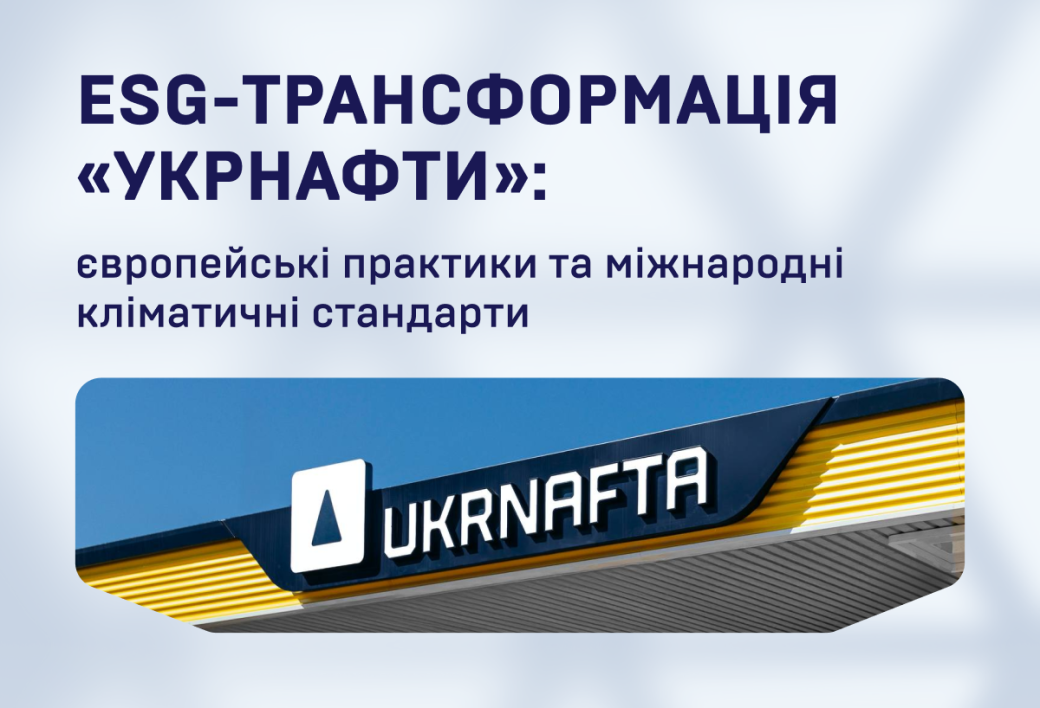
The company is strengthening its strategic partnership with the European Bank for Reconstruction and Development (EBRD) by launching cooperation with the EBRD’s Corporate Climate Governance Facility (CCGF).
The project is aimed at bolstering sustainable corporate governance practices, improving the company’s long-term resilience and increasing operational transparency.
Ukrnafta says it is laying the foundations for a long-term transformation of its business model in line with European climate policies and global energy trends, while putting in place a systematic approach to managing climate-related risks and opportunities. This will support more transparent disclosures in line with European requirements, enhance competitiveness and strengthen Ukrnafta’s position as a modern energy company integrated into global capital markets and the future low-carbon energy system.
For the first time, Ukrnafta will carry out a double materiality assessment of climate risks — a key element of modern non-financial reporting standards that combines an assessment of financial risks to the company with an assessment of its impact on the climate. In other words, it will simultaneously assess the impact of climate change on the company (external impact) and the impact of the company’s activities on the climate (internal impact). The results will form the basis for developing a Climate Strategy, which Ukrnafta describes as critical in the context of the European Green Deal and global energy transition trends, supporting long-term value creation and the company’s investment appeal.
In parallel, Ukrnafta will work towards full compliance with the European Sustainability Reporting Standards and the Corporate Sustainability Reporting Directive (ESRS/CSRD) disclosure requirements, as well as other EU regulations, as Ukraine aligns its legislation with European norms.
A key deliverable under the project is the development of a Climate Action Plan, which will serve as a roadmap for moving from a traditional business model to a modern, integrated multi-energy company with a low carbon footprint.
The company says this will allow it to introduce a risk management system designed to minimise the impact of global climate change on production assets and supply chains.
The project is being implemented in cooperation with EY (Ernst & Young) in Ukraine, bringing international expertise and best global practice to support the recovery of the energy sector.