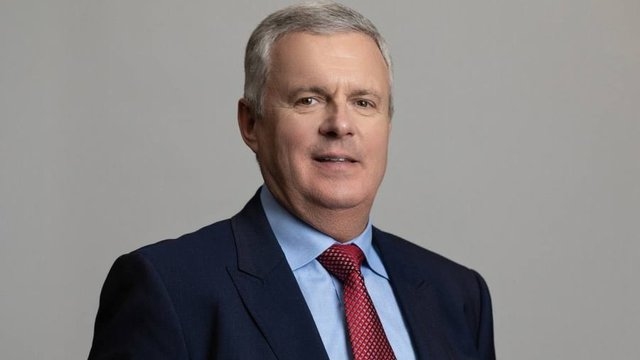
Our Plan for 2028 Envisions the Implementation of Around 1 GW of Electrical and Thermal Energy, as well as Storage Solutions – Chairman of UKRNAFTA’s Supervisory Board
Interfax-Ukraine Blitz Interview
- UKRNAFTA is developing a strategic investment plan for the next five years. Could you please tell us what stage you are currently at?
This is one of the key goals of the Supervisory Board. The strategic investment plan for the next five years is nearly completed: minor adjustments are being made based on shareholders' comments.
- What will it include approximately?
The five-year investment plan defines the budget and work program, which will allow UKRNAFTA to continue its operations, increase production, drilling, reserve replacement, generate net profits, pay dividends to shareholders, and contribute taxes to Ukraine’s budget.
The main idea is for the company to fulfill its primary function during the war, as well as grow, develop, and show our shareholders attractive economic projects.
- Have you received a letter of expectation regarding these plans?
I know that the list is being discussed at the government level, and it will likely first be sent to the shareholders – Naftogaz and the Ministry of Defense. Then, it will be discussed with UKRNAFTA.
Naftogaz is one of the shareholders of UKRNAFTA, and it is also involved in hydrocarbon extraction, so UKRNAFTA's results are part of the growth plan for extraction. We are an important component of Naftogaz's investment program.
- UKRNAFTA has entered into an agreement with the EBRD for financing the construction of gas generation. What other externally funded projects do you plan?
Yes, we recently signed a loan agreement with the EBRD. I would like to emphasize that, in addition to the loan funds, the EBRD is providing us with grant support for several tens of millions of euros, for which we are very grateful to both the bank and the donors. All of these funds will be used for constructing gas generation.
In the first phase, we plan to build about 375 MW of new energy capacity through gas-to-power projects.
Additionally, we are working to attract investment for the construction of renewable energy capacities such as solar and wind power: we aim to implement about 200 MW of renewable energy in the next two years.
Initially, our plan for 2028 envisions the implementation of around 1 gigawatt of new electrical and thermal energy, as well as storage solutions (for energy storage), which will require significant investment. We plan to attract funds from current donors, national and international banks/investors. The main goal is to direct the company’s funds towards its core activity of increasing hydrocarbon production, while energy projects must be self-sufficient, including in terms of attracting financing.
I would also like to thank the investors who are currently supporting us in building gas generation. UKRNAFTA understands the importance of traditional energy sources, especially in the wartime conditions. At the same time, we are using gas as a transitional fuel for electricity generation. This allows us to work on environmentally sustainable solutions for the future.
- Regarding corporate governance: Currently, UKRNAFTA has a Supervisory Board and a director. Do you plan to form an executive board?
In 2024, UKRNAFTA elected a new Supervisory Board consisting of five members. This includes two representatives from shareholders: the Ministry of Defense of Ukraine and Naftogaz of Ukraine, as well as three independent directors (from Norway, the UK, and Canada). We are actively working to implement OECD best practices together with UKRNAFTA management.
Furthermore, we are implementing the best ESG practices and European standards for non-financial reporting. The ESG development plan is currently in the works, and we hope to implement it this year. We thank USAID for supporting this project.
As for the executive board: we are already selecting candidates for the positions. We hope to complete this process within the next two to three months.
At the same time, we are developing a new company charter with the shareholders, taking into account the best business practices.
- In the 90s and early 2000s, UKRNAFTA was a leading company in the Ukrainian stock market. How do you assess the possibility of the company returning to the exchange?
This is an issue I cannot detail at the moment. The decision as to whether UKRNAFTA will return to being a public company depends on the shareholders and the strategy of the Ukrainian government. This issue is currently not a priority as Ukraine is dealing with more urgent operational matters. I expect it to become more relevant within the framework of post-war reconstruction.
- Regarding the deal with Shell to purchase 51% of the network in Ukraine. Are you considering purchasing the remaining 49%?
For now, we are focusing on finalizing the deal to purchase 51%. We have not yet raised the issue of the remaining 49%.
- Do you sense interest in UKRNAFTA and Ukraine at the forum in Davos?
One of the important aspects of this forum is the level of interest and motivation of the people. They recognize the ingenuity, creativity, courage, and dedication of Ukrainians in terms of resilience during the war and simultaneously planning for the post-war reconstruction of the country.
The number of investment opportunities at the national and international levels is enormous.
UKRNAFTA is considering investments in exploration, field development, production, joint ventures, and oil services. We are also planning the development of mid-term aspects, such as building new pipelines, etc. Renewable energy is also an important area. We strive to apply the latest technologies to expand the company’s horizons.
Investment opportunities will grow as the peace process becomes clearer. It is now important for investors to understand Ukraine’s potential and prepare for participation in its recovery.